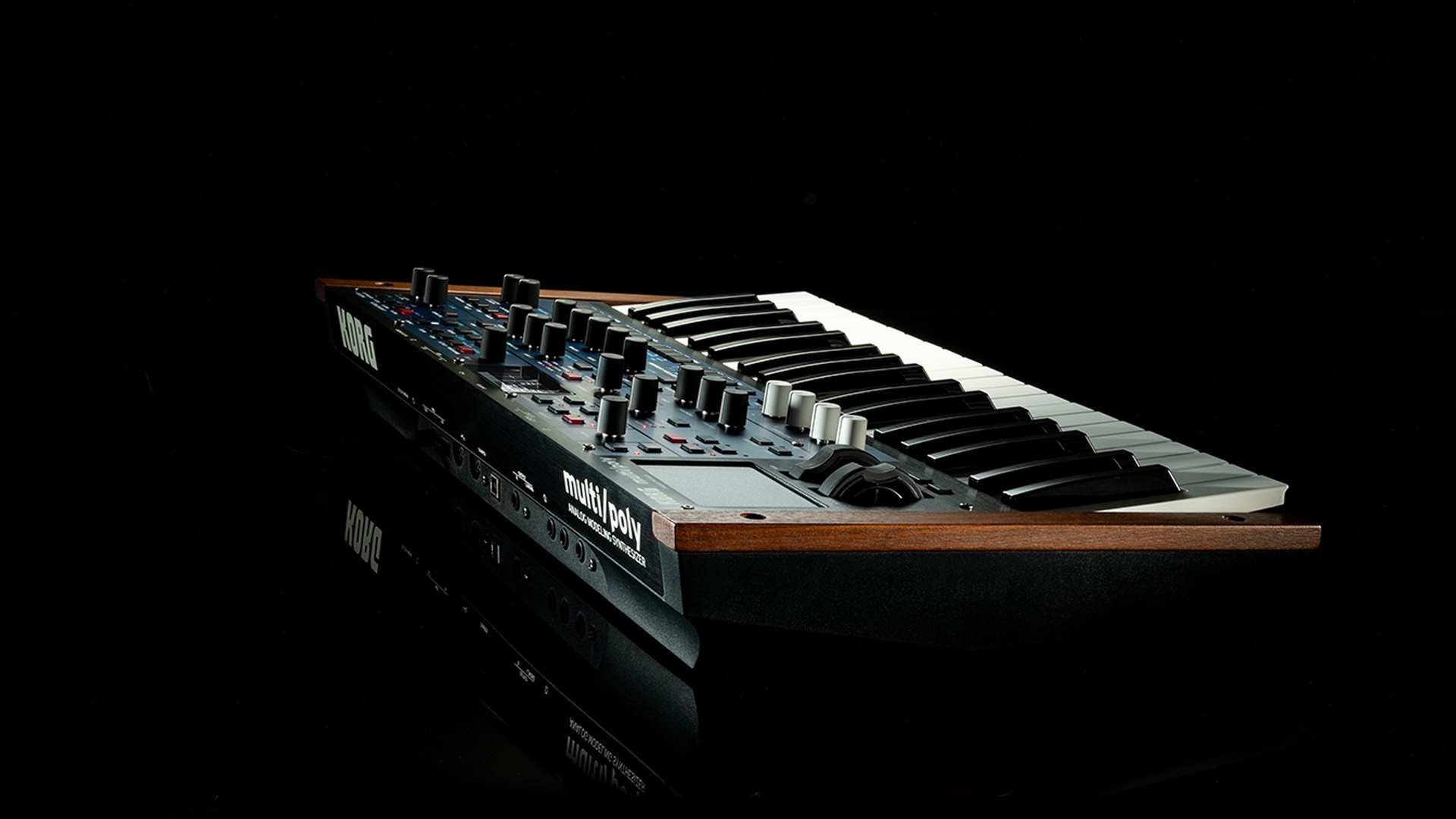
For electronic music producers, sound designers, and hardware synth enthusiasts, finding an instrument that delivers deep sound design capabilities without breaking the bank is a constant pursuit. The Korg multi/poly emerges as a compelling answer, packing a 60-voice, four-layer hybrid synthesis engine into a compact, affordable hardware unit. By combining modeled analog behavior, digital wavetables, and extensive waveshaping, it offers an incredibly vast sonic landscape, albeit with some physical and workflow compromises.
This article is AI curated and created.
The Power of Hybrid Synthesis & Layered Architecture
The core strength of the Korg multi/poly lies in its multi-layered hybrid architecture. It allows producers to stack up to four independent program layers per performance, with each layer possessing its own oscillators, dual filters, extensive modulation routings, and built-in insert effects. This setup is incredibly potent for designing rich, evolving soundscapes, complex textures, and dense pads that shift dynamically over time.
By blending modeled analog warmth with the sharp, digital precision of wavetable synthesis and waveshaping, the multi/poly transcends traditional category boundaries. It is not merely a remake of the classic Korg Mono/Poly, but a modern powerhouse optimized for intricate studio sound design where layers interact and modulate each other to create unique, high-signal acoustic results.
Key Technical Specifications
- Polyphony: Outstanding 60-voice capacity, avoiding voice stealing even during complex, four-layer performances.
- Synthesis Engine: Hybrid architecture combining Virtual Analog, Wavetable, and Waveshaping engines.
- Keyboard: 37 velocity-sensitive keys (note: lacks aftertouch).
- Controls: Dedicated hardware dials for primary parameters, supplemented by shared controls and menu-driven secondary functions.
- Connectivity: MIDI In/Out/Thru, USB-MIDI, stereo line outputs, and headphone jack (note: no audio-over-USB).
Workflow & Control: The Hardware Trade-offs
To pack such a deep engine into a portable and accessible instrument, Korg made deliberate hardware compromises. The compact 37-key keybed, while highly playable, does not support key aftertouch—a limitation that some performance-oriented players or expressive sound designers might find restrictive during recording or live sets.
Additionally, because of the synth''s deep parameters, users must rely on shared encoders and navigate a detailed menu structure on the small display. This means it lacks the immediate "one-knob-per-function" workflow of classic analog synthesizers. For fast, hands-on sound tweaking, these shared controls and menu structures introduce a slight learning curve and require a more methodical programming approach.
Product Consensus & Studio Verdict
Independent reviewers across the industry (including Loopop, Starsky Carr, and MusicRadar Tech) agree that the Korg multi/poly is an exceptionally powerful synthesizer for its price point. It rewards dedicated programming and fits perfectly into a DAW-centric hybrid studio workflow where it can be automated over MIDI and recorded through high-quality preamps. However, producers looking for immediate analog gratification or a luxurious performance keybed may find its compact design and menu diving less appealing.
Common Pitfalls to Avoid
- Approaching it as a Mono/Poly remake: Approaching the multi/poly as a direct recreation of the vintage Mono/Poly will lead to disappointment. It is a completely different, much deeper instrument built for modern sound synthesis.
- Ignoring the layer capabilities: Operating the multi/poly with simple, single-layer patches ignores its true superpower. To get the most out of the instrument, embrace its multi-layer structure to build complex, responsive patches.
- Underestimating the learning curve: Jumping in without reading the manual or spending time learning the shared controls and menu shortcut workflow can lead to frustration.
- Assuming audio-over-USB exists: The USB port is for MIDI and management only; you must route physical audio cables from the line outputs to your audio interface to record the synth into your DAW.
Further Reading
Korg multi/poly Review — MusicRadar
Read MusicRadar''s comprehensive hands-on review analyzing the build, playability, and sonic potential of the multi/poly engine.
multi/poly Synthesis Discussion — Reddit
Join the discussion on r/synthesizers exploring owner impressions, synthesis architecture, and sound design potential.